
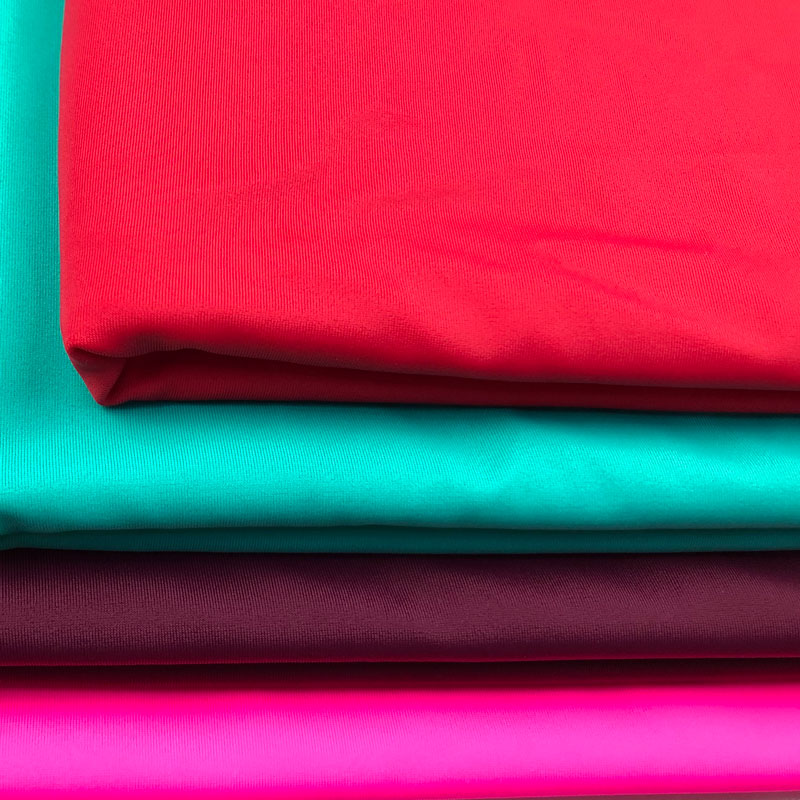
Ask a room full of sourcing people which stretch fabric wins, and the argument rarely stays polite. Both polyester spandex and nylon spandex stretch four ways, both come in the same GSM ranges, and in a photo shoot they are almost indistinguishable. The difference only shows up after the garment has been through a real wear cycle, a real wash cycle, or a real season of pool water. That is where the choice gets expensive if it was made on feel alone.
The default answer is usually wrong because it skips the use case
Nylon spandex has a long reputation as the premium option, and for good reason. The fiber has a silkier hand, deeper dye uptake, and superior stretch recovery when compared side by side with standard polyester spandex. A typical nylon spandex blend sits around 80/20 nylon to spandex, while polyester spandex often runs 85/15 or 90/10. Those numbers matter less than what the garment will actually face.
The real question is not which fabric is “better.” It is which failure mode is acceptable. A competitive swimsuit that loses recovery halfway through a season is a warranty problem. A printed legging that fades after a dozen washes is a sell-through problem. A beach cover-up that pills in the sun is an aesthetic problem. Each points toward a different base fiber.
Chlorine is the fork in the road that most buyers underestimate
Chlorine degrades spandex no matter what carries it, but the base fiber determines how fast the whole structure goes soft. Polyester resists chlorine attack considerably better than nylon. Industry sources put the gap in blunt terms: a polyester suit can outlast a nylon/spandex suit in chlorinated water by a factor of three or four. Nylon, for all its softness, weakens faster under continuous chlorine exposure.
That does not mean nylon spandex is a poor choice for swim. It means nylon spandex is the wrong choice for a suit that lives in a chlorinated pool five days a week. For resort wear, beach swim, and poolside lounging where chlorine contact is occasional, nylon’s hand feel and color depth still justify the premium. The mistake is treating “swimwear” as one category. It is not.
A case from a swimwear program that swapped fiber for the wrong reason
A mid-size swim brand once moved a training-suit program from nylon spandex to a lower-cost polyester spandex to protect margin. The first production run looked fine on the table. By the second month of pool use, returns started coming back with the same complaint: the leg opening had relaxed and the suit was riding up. Lab checks showed the spandex was still present, but the fabric’s recovery had fallen off faster than the brand’s test protocol had predicted. The lab had tested to a standard wash cycle, not a chlorinated immersion cycle.
The fix was not a more expensive spandex. It was a different base fiber for that specific end use. The training line moved back to a nylon-rich construction, while the brand’s beach and outdoor prints stayed on polyester. The lesson was not “nylon always wins.” The lesson was that the test method has to match the wear environment, or the fiber choice is just a guess with a spec sheet attached.
Where polyester spandex quietly outperforms the premium option
Polyester spandex has two structural advantages that nylon cannot match without added cost. The first is UV resistance. Polyester degrades more slowly under prolonged sun exposure, which makes it a more forgiving base for outdoor activewear, beachwear, and anything that spends its life on a paddleboard or a running trail. The second is moisture handling. Polyester wicks and dries faster because it does not absorb water into the fiber the way nylon does. For high-sweat training tops and quick-dry athletic layers, that difference is felt by the wearer on the first workout, not the tenth.
There is also a printing argument. Polyester’s dye chemistry is better suited to sublimation printing, which is why so many all-over print leggings and fashion activewear bases are polyester spandex rather than nylon. If the design is the product, polyester is often the more reliable canvas.
The cost gap is real, but landed cost tells a different story
Polyester spandex generally prices lower per yard than nylon spandex, often by a meaningful margin. The gap reflects raw fiber economics more than processing complexity. But the quote sheet is not the cost. Yield loss, defect rates, and freight can move the comparison.
| Cost component | Standard poly-spandex | Premium nylon-spandex |
|---|---|---|
| Base fabric ($/yd) | $3.20 | $5.50 |
| Yield loss at 5% ($/yd) | $0.16 | $0.28 |
| Freight and duty ($/yd) | $0.45 | $0.50 |
| True landed cost ($/yd) | $3.81 | $6.28 |
Illustrative comparison adapted from sportswear fabric cost modeling; freight and duty vary by volume, Incoterms, and trade terms.
A polyester spandex with a high defect rate can erase its own price advantage before it reaches the cutting table. The same logic applies in reverse: a clean nylon spandex with tight yield control can be closer to polyester on landed cost than the ex-factory quote suggests. Fiber choice and mill quality control are separate variables, and conflating them is how sourcing teams end up with a fabric that hits the target price but misses the target performance.
A practical screen for choosing between the two
If the garment will see chlorinated water regularly, start with nylon spandex or a chlorine-resistant engineered polyester, and verify with an immersion test that matches the actual use cycle.
If the primary environment is sun, sweat, and repeated home laundering, polyester spandex is usually the more balanced choice for UV and dry time.
If color depth and a silky hand are the selling points, nylon spandex still has the edge on dye uptake and surface feel.
If the product relies on all-over sublimation print, polyester spandex is the lower-risk base.
If the order is cost-sensitive and the end use is casual fashion or non-pool activewear, polyester spandex is a legitimate specification, not a compromise.
The uncomfortable truth is that many “nylon vs polyester” decisions are made at the sample stage, where both fabrics look good and neither has been stressed. The better practice is to screen by failure mode first, then negotiate price. A fabric that costs less per yard but returns more units is not cheaper.
Jdttex runs vertically integrated knit development and production with in-house knitting, dyeing, and printing capacity for stretch fabrics. For buyers working through a polyester spandex or nylon spandex specification, that structure keeps the base cloth, the finish, and the print process in the same quality loop, which matters when the difference between two fabrics only shows up after the first wear cycle.
Table of Contents
- The default answer is usually wrong because it skips the use case
- Chlorine is the fork in the road that most buyers underestimate
- A case from a swimwear program that swapped fiber for the wrong reason
- Where polyester spandex quietly outperforms the premium option
- The cost gap is real, but landed cost tells a different story
- A practical screen for choosing between the two