
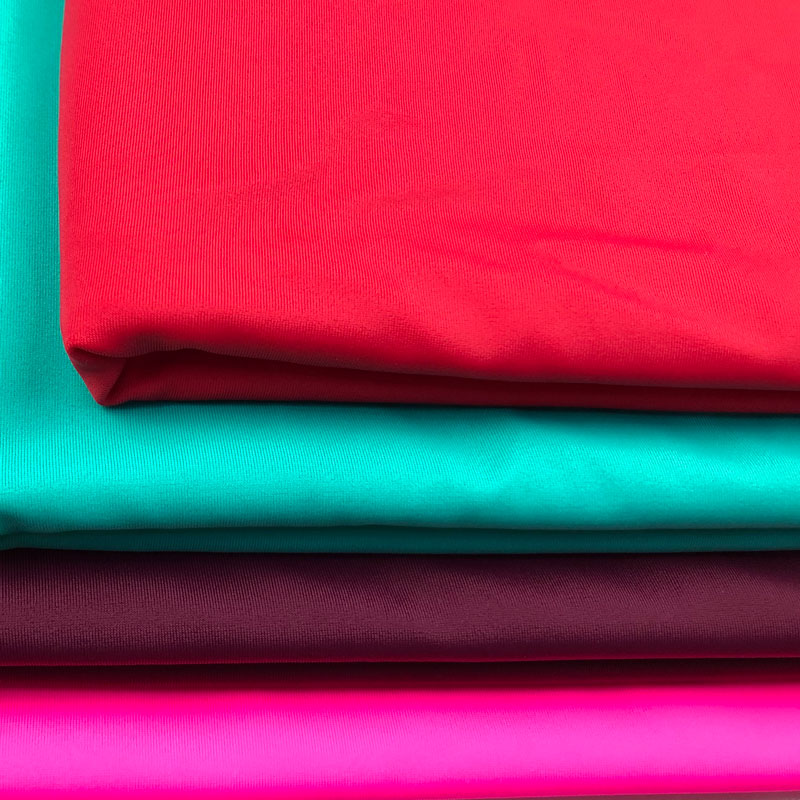
Ask a room full of sourcing people which stretch fabric wins, and the argument rarely stays polite. Both polyester spandex and nylon spandex stretch four ways, both come in the same GSM ranges, and in a photo shoot they are almost indistinguishable. The difference only shows up after the garment has been through a real wear cycle, a real wash cycle, or a real season of pool water. That is where the choice gets expensive if it was made on feel alone.
The default answer is usually wrong because it skips the use case
Nylon spandex habet diuturnam famam ut optio praecipua, et pro bona causa. Fibra habet tactum sericosiorem, absorptionem coloris profundius, et recuperationem extensionis excellentiorem quam polyester spandex vulgaris, cum comparatur ad eam. Mixtura typica nylon spandex est circa 80/20 nylon ad spandex, dum mixtura polyester spandex saepe est 85/15 aut 90/10. Illi numeri minus valent quam quid vestimentum vere sustinebit.
Verum quaestio non est quae tela sit "melior." Sed quae modus defectus sit acceptabilis. Vestimentum natatorium competitivum quod amittit recuperationem in media parte anni est problema garantis. Caligae impressae quae evanescunt post duodecim lavationes sunt problema venditionis. Vestimentum litus quod pilos generat in sole est problema aesthetici. Unumquodque ad diversam fibrarum basim ducit.
Chlorinum est bivium quod plerique emptores subaestimant
Chlorinum spandexum corrumpit, quocumque vehatur; sed fibra prima determinat quam cito tota structura molliscatur. Polyester resistit chlorino multo melius quam nylon. Fontes industriales differentiam exprimunt simpliciter: vestis ex polyester diuturnior est quam vestis ex nylon/spandex in aqua clorata, per triplum aut quadruplum. Nylon, etsi mollis, sub continua expositione ad chlorinum cito debilitatur.
Hoc non significat nylon/spandex esse malam optionem pro natatione. Significat eam esse malam optionem pro vesti quae quinque diebus in hebdomade in piscina clorata manet. Pro indumentis in stationibus, natatione in litore, et otio ad piscinam, ubi contactus cum chlorino rarus est, tactus et color profundus nylon adhuc praemium iustificant. Erratum est ‘vestem natatoria’ ut unam categoriam tractare. Non est una.
Exemplum ex programma vestis natatoriae, quod fibras mutavit ob causam falsam
A mid-size swim brand once moved a training-suit program from nylon spandex to a lower-cost polyester spandex to protect margin. The first production run looked fine on the table. By the second month of pool use, returns started coming back with the same complaint: the leg opening had relaxed and the suit was riding up. Lab checks showed the spandex was still present, but the fabric’s recovery had fallen off faster than the brand’s test protocol had predicted. The lab had tested to a standard wash cycle, not a chlorinated immersion cycle.
The fix was not a more expensive spandex. It was a different base fiber for that specific end use. The training line moved back to a nylon-rich construction, while the brand’s beach and outdoor prints stayed on polyester. The lesson was not “nylon always wins.” The lesson was that the test method has to match the wear environment, or the fiber choice is just a guess with a spec sheet attached.
Ubi polyesterspandex tacite praestat optionem pretiosiorem
Polyesterspandex habet duas praerogativas structurales quas nylon sine addito pretio aequare non potest. Prima est resistentia adversus ultravioletta. Polyester lente deterioratur sub diuturna expositione solari, quare est indulgentior basis pro vestibus activis exterioribus, vestibus litus, et quibuslibet rebus quae vitam suam agunt in tabula remigandi aut in semita cursus. Secunda est tractatio umoris. Polyester transmittit et siccat celerius, quia non absorbet aquam in fibras sicut nylon. Pro superioribus vestibus ad exercitia sudorifera et pro stratis athleticis cito-siccantibus, haec differentia sentitur ab utente in primo exercitatione, non in decimo.
Est etiam argumentum pro impressione. Chymia colorantis polyesters melius aptatur ad impressionem sublimationis, quare multae legiones cum impressione universali et bases vestium activarum ad modum sunt ex polyesterspandex potius quam ex nylon. Si designatio est productum, polyester saepius est fiducior tela.
The cost gap is real, but landed cost tells a different story
Polyester spandex generally prices lower per yard than nylon spandex, often by a meaningful margin. The gap reflects raw fiber economics more than processing complexity. But the quote sheet is not the cost. Yield loss, defect rates, and freight can move the comparison.
| Pars costalis | Standard poly-spandex | Premium nylon-spandex |
|---|---|---|
| Base fabric ($/yd) | $3.20 | $5.50 |
| Yield loss at 5% ($/yd) | $0.16 | $0.28 |
| Freight and duty ($/yd) | $0.45 | $0.50 |
| True landed cost ($/yd) | $3.81 | $6.28 |
Illustrative comparison adapted from sportswear fabric cost modeling; freight and duty vary by volume, Incoterms, and trade terms .
A polyester spandex with a high defect rate can erase its own price advantage before it reaches the cutting table. The same logic applies in reverse: a clean nylon spandex with tight yield control can be closer to polyester on landed cost than the ex-factory quote suggests. Fiber choice and mill quality control are separate variables, and conflating them is how sourcing teams end up with a fabric that hits the target price but misses the target performance.
A practical screen for choosing between the two
If the garment will see chlorinated water regularly, start with nylon spandex or a chlorine-resistant engineered polyester, and verify with an immersion test that matches the actual use cycle.
If the primary environment is sun, sweat, and repeated home laundering, polyester spandex is usually the more balanced choice for UV and dry time.
If color depth and a silky hand are the selling points, nylon spandex still has the edge on dye uptake and surface feel.
If the product relies on all-over sublimation print, polyester spandex is the lower-risk base.
If the order is cost-sensitive and the end use is casual fashion or non-pool activewear, polyester spandex is a legitimate specification, not a compromise.
The uncomfortable truth is that many “nylon vs polyester” decisions are made at the sample stage, where both fabrics look good and neither has been stressed. The better practice is to screen by failure mode first, then negotiate price. A fabric that costs less per yard but returns more units is not cheaper.
Jdttex runs vertically integrated knit development and production with in-house knitting, dyeing, and printing capacity for stretch fabrics. For buyers working through a polyester spandex or nylon spandex specification, that structure keeps the base cloth, the finish, and the print process in the same quality loop, which matters when the difference between two fabrics only shows up after the first wear cycle.
Index Rerum
- The default answer is usually wrong because it skips the use case
- Chlorinum est bivium quod plerique emptores subaestimant
- Exemplum ex programma vestis natatoriae, quod fibras mutavit ob causam falsam
- Ubi polyesterspandex tacite praestat optionem pretiosiorem
- The cost gap is real, but landed cost tells a different story
- A practical screen for choosing between the two