
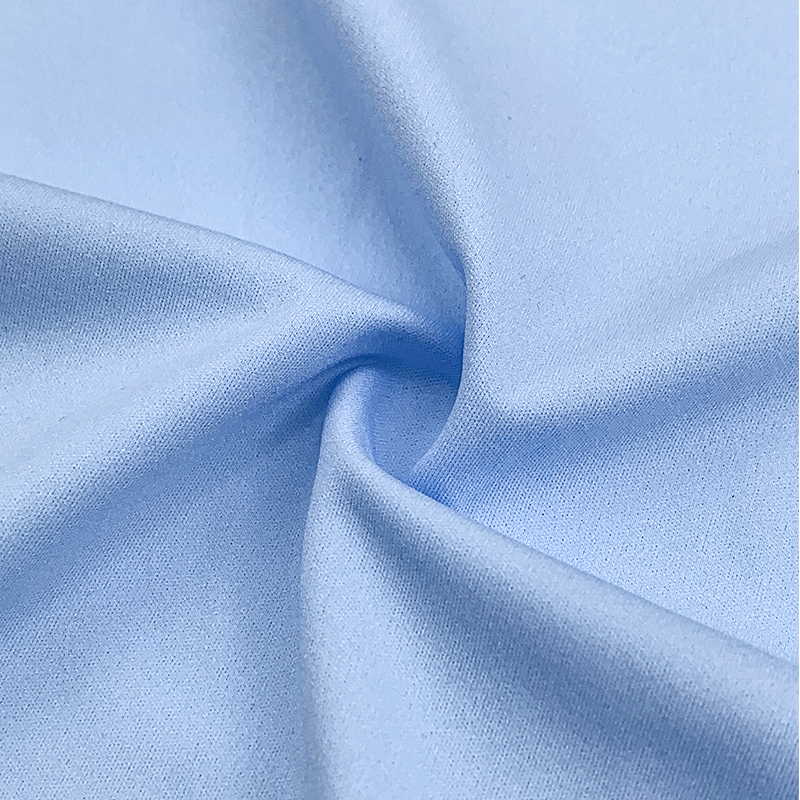
The Physics Behind a Pleat That Survives the Washer
A pleated skirt that loses its pleats after the first wash is a design failure, not a laundry problem. The pleats are the product. Everything else is secondary. And the fabric that makes those pleats hold, through wear, washing, and the general entropy of daily life, is almost always a polyester spandex blend.
The reason is not complicated, but it is specific. Pleat retention in polyester spandex fabric comes down to the thermal behavior of polyester fibers and the elastic recovery contributed by spandex. Understanding how those two properties interact explains why this material dominates the pleated skirt category and where its limitations lie.
Why Polyester Fibers Hold a Shape Once They Are Set
Polyester is a thermoplastic fiber. That single fact is the foundation of pleat retention. Thermoplastic means the fiber softens when heated and hardens when cooled, and the shape it is held in during cooling becomes the shape it remembers.
In pleat production, the fabric is folded or molded into the desired pleat pattern and then subjected to heat, typically in a steam-setting or heat-setting process. The polyester molecular chains relax under heat, rearrange to accommodate the folded geometry, and then lock into that new configuration as they cool. The result is a permanent-ish crease that does not require ironing to maintain.
This is fundamentally different from how cotton or wool hold a pleat. Cotton pleats rely on hydrogen bonds that are disrupted by water and heat, which is why cotton pleated skirts need re-pressing. Wool pleats rely on the natural crimp and interlocking scale structure of the fiber, which can be reset by moisture and heat but is not as durable as a thermoplastic set. Polyester pleats are locked in at the molecular level, which is why they survive repeated washing without special care.
How Spandex Contributes Recovery Without Sacrificing the Set
Contentum spandex in mistura polyestri et spandex servit proposito diverso ab polyestro. Spandex praebet recuperationem elasticam, quod significat ut textus ad suas pristinas dimensiones revertatur post distensionem. Hoc momenti est pro veste plicata, quia plicae deformationi repetitae subiciuntur dum portator sedet, stat, et movetur.
Sine spandex, vestis plicata ex polyestro adhuc plicas suae retineret, sed ipse textus per tempus distortus fieret. Margines plicarum distenderentur, vestis figuram suam intentam amitteret, et tota vestis rigida et inflexibilis videretur. Contentum spandex inter 3% et 10% sufficientem elasticitatem addit ut textus cum corpore moveatur, simul geometriam plicarum servans.
Interactio inter duas fibras est synergica. Polyester praebet memoriam thermicam quae plicam firmat. Spandex praebet recuperationem mechanicam quae textum a deformatione perpetua prohibet. Simul, producunt tunicam quae formam suam retinet dum sedetur, ambulatur, et interdum in machina lavandi rotatur.
Processus Temperaturae-Regulandae Qui Qualitatem Plicae Facit Aut Frangit
Praestatio tunicae plicatae ex polyester et spandex tanto a processu finiendo pendet quantum a contento fibrorum. Regulatio temperaturae est gradus criticus, ubi qualitas inter fornitoribus valde divergit.
Tela debet calefieri ad temperaturam satis altam ut structura molecularis polyestri relaxetur, sed non tam altam ut spandex laedatur. Haec fenestra temperaturae angusta est. Polyester molliscitur inter 230°C et 240°C, dum spandex incipit degradari ad temperaturas prope 175°C ad 180°C. Processus caloris-fixandi ita regulandus est ut polyester satis relaxetur, sine damno spandex.
Qualitas plicarum etiam pendet ex praecisione mechanica operationis plicandi. Latitudo, profunditas et intervallum plicarum constans esse debent per totam latitudinem telae. Variationes in geometria plicarum irregularitates visibiles in vestimento perfecto creant, praesertim cum subucula movetur. Hoc est problema disciplinae fabricandae aeque ac technicum, et ideo subuculae plicatae e molendinis peritis oriundae magis politum aspectum habent quam illae e suppeditatoribus qui plicandum post factum habent.
| Factor | Effectus in Retentionem Plicarum | Intervallo tipico per gonne pieghettate |
|---|---|---|
| Polyester content | Contributore principale alla fissazione termica | 90%–97% |
| Contentus spandex | Fornisce recupero elastico | 3%–10% |
| Temperatura di fissaggio termico | Determina la qualità della fissazione molecolare | Calibrato sulla miscela di fibre |
| Fabricae pondus | Influenza il cadimento e la definizione delle pieghe | 80–150 GSM |
| Temperatura Lavationis | Temperature più elevate rilassano progressivamente la fissazione | Consigliato da freddo a tiepido |
Where Polyester Spandex Pleated Skirts Fall Short
No material is perfect, and polyester spandex has limitations that buyers should understand before specifying it.
The first is heat sensitivity. A pleated skirt made from polyester spandex will lose its pleat definition if exposed to temperatures above the heat-setting range, such as in a hot dryer or a high-temperature iron. Care labels are not optional for this category. They are functional instructions.
The second is the hand feel. Polyester is not a naturally soft fiber. It can be finished to feel smoother, and blending with spandex improves the drape, but it will never feel as soft as modal or a fine cotton. For skirts where tactile luxury is a priority, polyester spandex may not be the right choice.
Tertius est staticus. Polyester habet humorem parum absorptivum, quod significat electricitatem staticam in condicionibus aridis accumulare posse. Hoc minus problema est in mixturis cum spandex, quae paulo meliorem humorem habent, sed adhuc consideratio est pro utentibus in climatibus aridis.
Haec limitatio non excludit polyester spandex pro tunicis plicatis. Simpliciter definit usum aptum. Pro tunica quae plicas tenere debet per usum repetitum et lavationem, quae polita apparet ad pretium rationabile, et quae formam suam servat per tempus, polyester spandex est optio fortis. Pro tunica ubi mollities et respirabilitas sunt praecipua requisita, alius textus melius servire potest.
Lex de Fabricatione e Pavimento Plicandi
Fabrica de vestimenta pro mulieres de magnitudo media in Europa Orientalis olim agebat programmatem de tunicis plicatis, utens textili ex polyester et spandex, quod bene se gesserat in experimentis. Primum magnum ordinatum transiit inspectionem qualitatis sine ulla difficultate. Secundum ordinatum, tria mensa postea positum, advenit cum plicis quae apertae erant visibiliter post primum lavacrum domesticum.
Investigatio problematis ad lineam temperaturae applicatae reduxit. Fornitor elementum calefaciens vetustum mutaverat, et novum elementum profilo temperaturae leviter diverso per latitudinem textilis utebatur. Centrum textilis ad temperaturam destinatam perveniebat, sed orae paucis gradibus frigidiores erant. Polyester in his zonis orarum non plene relaxatus erat, itaque plicae eandem gradum fixationis thermicae non attingebant.
The fix was straightforward once identified: recalibrate the heat-setting line and verify temperature uniformity across the full width. The larger lesson was that pleat quality is a process control problem, not just a materials problem. Even the right fiber blend will underperform if the heat-setting step is not held to tight tolerances.
Matching Polyester Spandex to Specific Pleated Skirt Applications
Different pleated skirt styles call for different fabric specifications. A knife-pleat tennis skirt, for example, benefits from a lighter weight polyester spandex fabric that allows the pleats to swing freely and dries quickly after activity. A box-pleat school uniform skirt, by contrast, typically uses a slightly heavier fabric with more body, which helps the pleats maintain a crisp, structured appearance.
Accordion pleats, which are narrow and densely packed, require the most precise heat-setting because the pleat geometry is more complex and small variations are more visible. Sunray pleats, which vary in width across the skirt, require careful pattern placement to ensure that the heat-set process accommodates the varying pleat dimensions.
For brands developing a pleated skirt line, the practical approach is to specify the fabric by its end use rather than treating all polyester spandex as interchangeable. A tennis skirt and a formal midi skirt may both use polyester spandex, but the optimal blend ratio, weight, and finishing parameters will differ.
JDTTEX, cognominatum Jiadatai Textile, aedificavit suam facultatem productionis circa hanc speciem evolutionis ad usum specificum. Operationes societatis de textura, tingenda, et perficienda in Dongguan sustinent evolutionem textilium ab initio specificatorum usque ad productionem massivam, cum exemplaribus gratuitis quae permittunt marcas experiri retentum plicarum antequam ad productionem definitivam committantur. Pro marcis quae indigent textili polyestere et spandex ad structuram plicatam specificam evoluta, cooperatio cum fabricante qui intellegit interactionem inter mixturam fibrarum et parametres perficiendi potest esse differentia inter tunicam quae formam suam retinet et alteram quae non retinet.
Index Rerum
- The Physics Behind a Pleat That Survives the Washer
- Why Polyester Fibers Hold a Shape Once They Are Set
- How Spandex Contributes Recovery Without Sacrificing the Set
- Processus Temperaturae-Regulandae Qui Qualitatem Plicae Facit Aut Frangit
- Where Polyester Spandex Pleated Skirts Fall Short
- Lex de Fabricatione e Pavimento Plicandi
- Matching Polyester Spandex to Specific Pleated Skirt Applications