
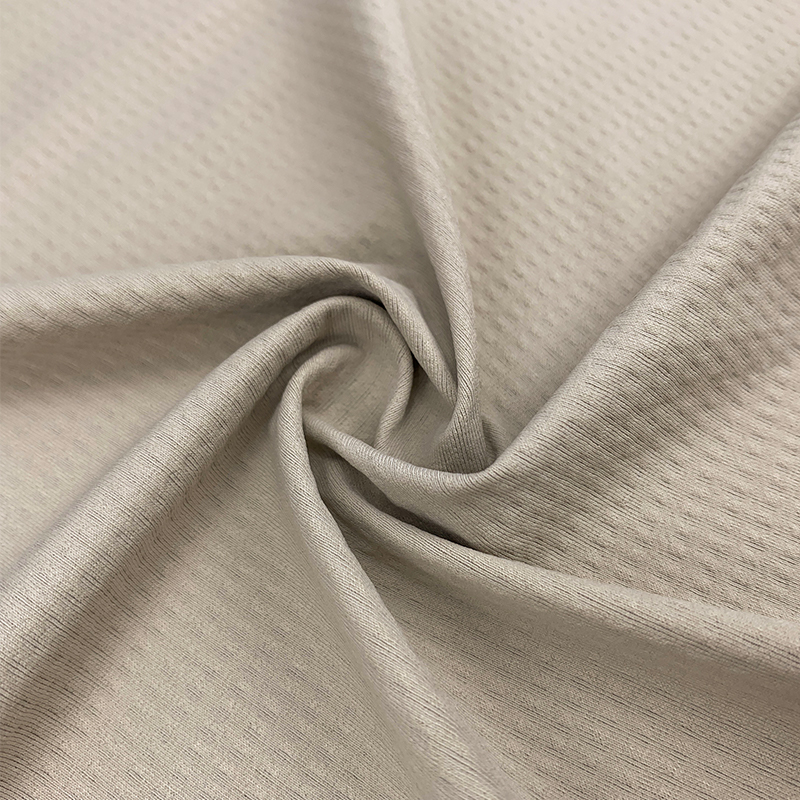
What Functional Fabric Actually Delivers Beyond Marketing Claims
Walk into any sporting goods store and the wall of tags reads like a chemistry exam: moisture-wicking, quick-dry, odor-resistant, four-way stretch. The jargon has become so thick that shoppers have learned to tune it out. But underneath the noise, something substantive has shifted. Functional fabric is no longer just a premium upgrade reserved for elite athletes. It has become the baseline expectation for anyone who sweats.
The global functional apparel market reached an estimated USD 436.61 billion in 2025 and is projected to hit USD 460.56 billion in 2026, according to Mordor Intelligence, with a compound annual growth rate of 6.62% through 2031. That growth is not driven by professional sports alone. It is driven by everyday people who expect their running shirt to manage moisture the same way their phone manages notifications: quietly and automatically.
What makes this shift interesting is that the technical bar keeps rising. A fabric that wicks sweat away from the skin used to be enough. Now it needs to wick fast, dry faster, resist odor after repeated washes, and still feel soft enough for a post-workout coffee run. That combination is harder to engineer than it sounds.
The Science Behind Moisture Management Gets More Sophisticated
The core mechanism of moisture-wicking fabric has not changed dramatically in decades. Hydrophobic fibers pull liquid away from the skin surface, while hydrophilic channels spread it across a larger area for faster evaporation. What has changed is the precision of that engineering.
Recent research published in Colloids and Surfaces A describes a Janus Coolmax fabric constructed by asymmetrically spraying a thermoplastic polyurethane solution onto one side of the base cloth. The result achieves unidirectional liquid transport in roughly 0.2 seconds and diffuses sweat across an area three times larger than a comparable Janus cotton fabric. Skin temperature under this material stayed about 1.6°C cooler than under its cotton counterpart during dynamic cooling tests.
That level of performance does not come cheap, and it does not come easy. The key challenge, as the researchers note, is that once the hydrophilic outer surface becomes saturated with sweat, the fabric loses its ability to transport liquid altogether. The solution involves engineering the outer layer to spread moisture quickly enough that evaporation keeps pace with accumulation. It is a balancing act between capillary pressure and evaporation rate, and it is the kind of problem that keeps textile engineers employed.
For brands sourcing functional fabric, the practical takeaway is that “moisture-wicking” is not a binary property. Two fabrics carrying the same marketing claim can perform very differently after thirty minutes of sustained exertion.
Why Athleisure Is Blurring the Lines Between Gym and Office
The athleisure wave is not new, but its appetite has expanded. Consumers now expect a single garment to work for a morning run, a video call, and a weekend errand without looking out of place in any of those settings. That demand creates an interesting tension for fabric developers.
Performance attributes like high stretch recovery and rapid drying tend to come with a technical, synthetic hand feel. Everyday wear demands drape, opacity, and a surface texture that reads as polished rather than sporty. Meeting both in one fabric requires structural creativity. Some mills have developed double-knit constructions where one face has a matte, silk-like finish and the reverse side is a functional mesh. Others blend fine-gauge spandex with textured polyester yarns to achieve a hand feel that photographs well on a hanger and still moves with the body.
According to market analysis from Mordor Intelligence, sportswear accounted for nearly 39% of the functional apparel market in 2025, and the athleisure trend is a significant contributor to that share. The implication for fabric suppliers is clear: the ability to develop a material that performs in the gym and presents well in a restaurant is now a competitive advantage, not a nice-to-have.
| Attribute | Pure Performance Fabric | Athleisure-Optimized Fabric |
|---|---|---|
| Moisture management | Optimized for high sweat rates | Moderate, balanced with comfort |
| Hand feel | Technical, sometimes slick | Soft, matte, or brushed |
| Stretch recovery | 4-way, high modulus | 2-way to 4-way, moderate |
| Typical end use | Running, training, cycling | Travel, casual wear, light exercise |
| Sourcing priority | Lab-tested performance data | Visual drape plus comfort testing |
Durability Is No Longer Optional for Functional Fabric
A common frustration among consumers is watching a premium performance garment lose its functional properties after a dozen washes. Water-repellent finishes degrade. Antibacterial treatments fade. UPF ratings drop. The industry has noticed.
Leading brands have started printing durability claims directly on hangtags, specifying how many wash cycles a given function can survive. For fabric mills, this means functional finishes must be engineered for longevity rather than initial performance alone. A DWR finish that beads water beautifully out of the box but fails after five home launderings is not a selling point. It is a return waiting to happen.
Testing standards provide a framework for comparing durability. AATCC 61 evaluates colorfastness to laundering, while ISO 105 covers a broader range of colorfastness tests. For abrasion resistance, ISO 12947 offers a standardized method that correlates reasonably well with real-world wear on apparel fabrics. Brands that specify these standards in their sourcing documents tend to get more consistent bulk quality than those that rely on visual inspection alone.
During a supplier audit in southern China a few years back, a quality team discovered that two production batches of the same wicking jersey performed identically in lab tests but diverged sharply after ten home washes. The difference traced back to a change in the softener formulation used during finishing. The lesson was not that the supplier was cutting corners deliberately, but that functional performance lives or dies in the finishing stage, and finishing recipes need to be locked down as tightly as yarn specifications.
How Sourcing Decisions Shape Product Performance
For brands building a sportswear line, the fabric sourcing conversation needs to start earlier than most teams expect. The instinct is to design the garment first and find fabric second. In practice, the material often dictates what construction is feasible.
A few practical considerations tend to separate smooth launches from painful ones:
Define the performance priority before requesting samples. A fabric optimized for maximum wicking may not have the stretch recovery needed for compression tights. Knowing which attribute is non-negotiable prevents wasted sampling rounds.
Request wash-tested performance data, not just initial test reports. A fabric that wicks well on day one but loses function after twenty washes is a customer service problem in slow motion.
Test print or dye compatibility early. Functional finishes can interfere with ink adhesion in digital printing, and the interaction varies by fiber type.
Verify shrinkage behavior on the actual garment construction, not just flat fabric. Knit fabrics can behave differently once cut and sewn.
The broader market context supports this disciplined approach. Asia-Pacific is projected to grow at the fastest rate in functional apparel through 2031, with a CAGR of 8.43%, which means sourcing networks in that region will face increasing demand and, inevitably, increasing competition for production capacity. Brands that build strong technical relationships with mills early tend to have more leverage when capacity tightens.
Where Functional Fabric Goes Next
The next frontier is not a single breakthrough fiber but a system-level approach. Fabrics that respond to body temperature, garments with zoned performance areas, and materials that combine recycled content with high-performance finishes are all moving from concept to commercial reality.
JDTTEX, a Dongguan-based textile manufacturer, has built its production model around this kind of development work. With over two decades of experience in knitting, printing, and dyeing, the company offers integrated services that span from trend analysis and fabric development through to bulk production. Their free sampling program and flexible minimum order quantities make it feasible for brands to test functional concepts before committing to large production runs. For sourcing teams evaluating functional fabric partners, that combination of technical depth and development flexibility is worth a conversation.
Table of Contents
- What Functional Fabric Actually Delivers Beyond Marketing Claims
- The Science Behind Moisture Management Gets More Sophisticated
- Why Athleisure Is Blurring the Lines Between Gym and Office
- Durability Is No Longer Optional for Functional Fabric
- How Sourcing Decisions Shape Product Performance
- Where Functional Fabric Goes Next