
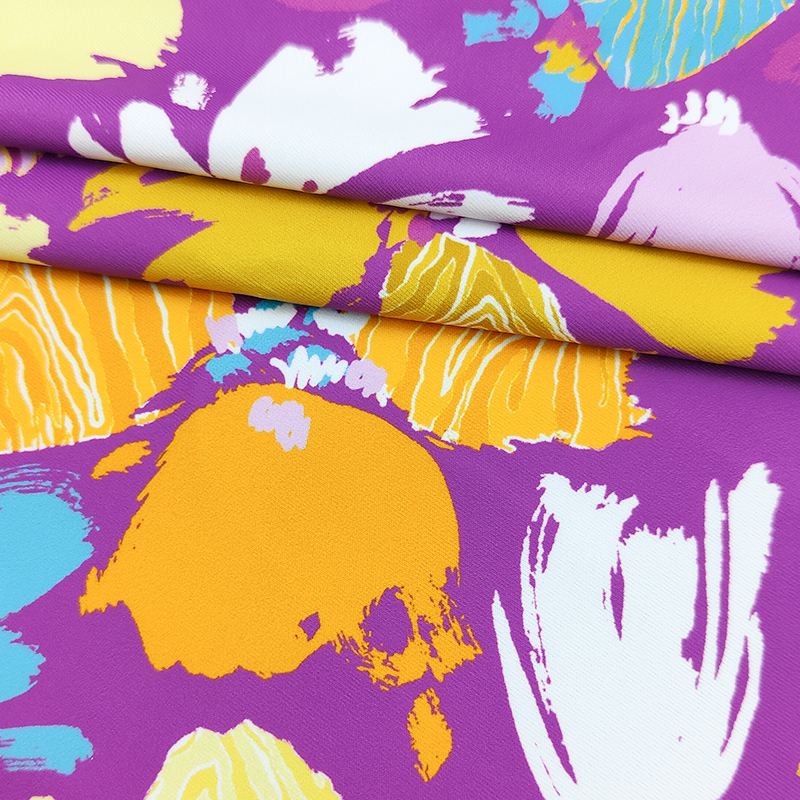
The Real Barrier That Custom Print Fabric Removes for New Brands
Starting a fashion label is an exercise in managing unknowns. Will the silhouette resonate? Will the price point hold? Will anyone outside a friend group actually buy it? The last thing a founder needs is a supply chain that adds more variables to an already uncertain equation.
Custom print fabric addresses one of the most stubborn variables: differentiation. In a market where blank garments are available to anyone with a browser and a credit card, the print is often the only thing that makes a product recognizably yours. But the traditional path to custom fabric has been gated by minimum order quantities that make no sense for a brand that has not yet sold its first unit.
The print-on-demand fabric ecosystem has changed that equation. A designer can now produce custom clothing fabric in quantities as low as a single yard, with turnaround measured in days rather than months. That shift has implications that go well beyond convenience.
Why Traditional Fabric Sourcing Fails Small Brands
A conventional textile mill is built around volume. Rotary screen printing, weaving, or knitting a custom run only makes economic sense above a certain quantity threshold. For most mills, that floor sits somewhere between 500 and 3,000 yards per design, per colorway. Some specialty digital mills will go lower, to perhaps 100 or 150 yards, but they remain wholesale-oriented operations with wholesale-oriented processes.
The obstacles beyond the minimum itself are equally daunting. Color separation and strike-off rounds add weeks and hundreds of dollars before any production fabric is made. Wholesale account approval often requires a business license and references. Lead times of 60 to 120 days from approved artwork to delivered yardage are standard. For a brand producing twenty dresses for an initial drop, none of this is a starting point. It is a wall.
The practical consequence is that many promising labels never get past the sampling stage. They either compromise on a stock fabric that looks nothing like the vision, or they overcommit to inventory they cannot sell through, burning cash before the market has given any signal.
What Low-Minimum Custom Print Fabric Actually Changes
The value of low-minimum custom print fabric is not just about order size. It is about converting a supply chain decision into a market test. When a brand can order 50 to 300 meters of a printed fabric, it can validate artwork, fit, and sell-through before scaling. If the first drop performs, the reorder happens with confidence. If it does not, the exposure is limited to a manageable amount.
This changes the entire risk calculus for a startup. Instead of betting the launch on a single large production run, the brand can treat the first collection as a development project. That framing matters because it aligns the fabric sourcing process with how startups actually operate: iterate, measure, adjust.
There is a technical dimension to this as well. Low-minimum production does not mean lower quality control requirements. If anything, it demands more attention to sample-to-bulk consistency, because a small brand has less margin for error in customer perception. Standards such as ISO 105 for colorfastness and AATCC 61 for laundering provide measurable benchmarks for comparing suppliers on something other than sample feel alone.
| Sourcing Approach | Typical Minimum | Lead Time | Best For | Primary Risk |
|---|---|---|---|---|
| Traditional mill | 500–3,000 yards per colorway | 60–120 days | Established brands with forecasted demand | Inventory overhang |
| Specialty digital mill | 100–150 yards | 30–45 days | Mid-stage brands testing new prints | Higher per-yard cost |
| Print-on-demand platform | 1 yard and up | 7–14 business days | Startups, indie designers, sample development | Limited fabric base options |
The Design Decisions That Determine Print Success
Getting a print onto fabric is the easy part. Getting it to look the way it did on screen, feel right in the hand, and survive real-world washing is where projects succeed or fail. A few decisions matter more than others.
The base fabric choice often gets less attention than the artwork, but it shapes everything downstream. A printed viscose for a resort shirt behaves nothing like a printed scuba crepe for a structured dress, even with identical artwork. Weight, drape, stretch, and opacity all interact with the print in ways that are difficult to predict from a digital mockup.
Print scale is another common pitfall. A motif that reads as delicate on a screen may become overwhelming when repeated across a full garment. Conversely, a small-scale print can disappear entirely at typical viewing distance. The only reliable way to judge is to print a physical strike-off at actual scale on the intended base cloth.
Color tolerance deserves explicit discussion with the supplier. Digital printing on textiles is not a CMYK process in the same way as paper printing. Fiber type, fabric construction, and finishing treatments all influence how ink behaves. Specifying a tolerance range and accepting that “close” is often the realistic target prevents disappointment on both sides.
A Small-Batch Launch That Almost Went Sideways
A small womenswear label based in Northern Europe learned this lesson during its first production run. The founder had developed a botanical print on a lightweight cotton poplin and approved the digital strike-off with enthusiasm. The sample looked exactly right: clean lines, saturated color, good hand feel.
The bulk order, placed with the same supplier on the same base fabric, arrived with a noticeable color shift. The greens had gone slightly muddier, and the fine linework had lost some definition. The supplier explained that the production run had used a different lot of base fabric with a slightly different weave density, which affected ink absorption. The issue was not negligence but the reality of textile production, where “same specification” rarely means identical at the fiber level.
The label salvaged the situation by adjusting the product photography and positioning the color variation as part of the collection’s character. It worked, but the founder later described the experience as a crash course in why sample approval and bulk production need to be treated as two separate verification steps, not one continuous process.
Matching Fabric Decisions to Brand Stage
Different stages of a brand’s growth call for different sourcing strategies. A pre-launch label testing concepts has different needs than a brand preparing for its third season with a proven customer base.
For early-stage testing, print-on-demand platforms offer the lowest barrier to entry. The trade-off is a narrower selection of base fabrics and higher per-yard costs. For brands that have validated their concept and are preparing a small production run, specialty digital mills offer a middle ground with more fabric options and better per-unit economics. For brands scaling into repeat production, traditional mill relationships become necessary for cost efficiency and capacity assurance.
The mistake many founders make is jumping to a traditional mill relationship before the brand has the sales data to justify the commitment. A fabric order placed too early ties up capital that is better spent on marketing or product development. Low-minimum sourcing is not a compromise. It is a strategically appropriate choice for a specific stage of business development.
JDTTEX, known as Jiadatai Textile, operates at the intersection of these stages. The Dongguan-based manufacturer offers low minimum order quantities alongside full knitting, printing, and dyeing capabilities, which means a brand can start with a development-scale order and scale into production without changing suppliers. Their free sample service and trend guidance are designed for labels that need technical support before they need volume. For startups navigating the gap between concept and commercial production, that kind of manufacturing partner can shorten the path considerably.
Table of Contents
- The Real Barrier That Custom Print Fabric Removes for New Brands
- Why Traditional Fabric Sourcing Fails Small Brands
- What Low-Minimum Custom Print Fabric Actually Changes
- The Design Decisions That Determine Print Success
- A Small-Batch Launch That Almost Went Sideways
- Matching Fabric Decisions to Brand Stage